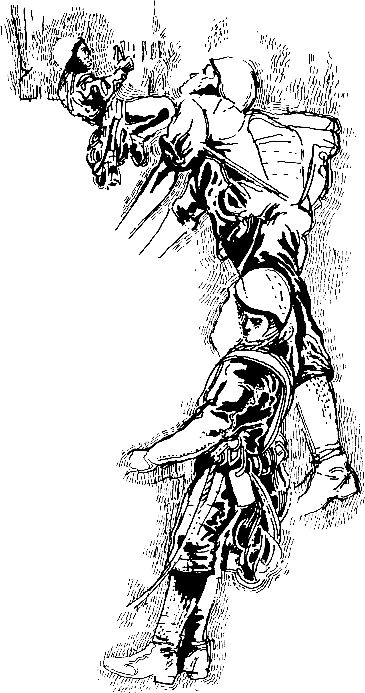
For well over 100 years after folk started mountaineering for fun, they wrapped rope around their bodies and twisted it around their arms to secure each other. Things took a different ‘turn’ in the 1960’s when someone threaded a rope through the link of a chain and clipped it into a karabiner, thus allowing the link and the karabiner to do the work previously done by the body and arm …. Body belays became a thing of the past and the belay plate was born.
Each belay plate was a simple aluminium plate with a hole for the rope until a guy called Fritz Sticht came up with a better version and got Edelrid to manufacture them. For a decade or so in the 1970’s/80’s just about everybody had a Sticht Plate and the term became generic even though your belay plate might not have been a Sticht.
There were many pretenders to the throne and manufacturers started to incorporate an abseil function into their belay plates. Dating from the 1970’s, this Bankl plate was one of the first and doesn’t seem to have been a huge success since there are very few around and the Figure of Eight, which was much more user friendly, appeared around the same time.
Our pal, Art McCarthy, out in California, found this one for us – another fine little curio to go in the collection.