4 x Cassin ring pitons. Round hangers attached through hole in pitons. Oval heads, two with wedge-shaped body and pointed end, two straight-edged with rounded ends.
Inscription description
a) Inscription on one side of wedge reads “R.C ITALY” On other side number “12”. b) “CASSIN” with oval surround. c) “CASSIN” “ITALY-9”. d) “CASSIN” “ITALY 13”.
Like much of British mountaineering terminology we’ve borrowed the word Piton from the continent; in this case it is French and means ‘little peg’ but to the mountaineering world in general it’s a metal spike which can be driven into a crack in the rock. They come in all shapes and sizes and have been around for a long, long time; the earliest one being basically a metal spike driven into the rock for various industrial purposes. Local blacksmiths would have made the first mountaineering versions in the late 1800s, giving them fabulous names such as picture hook pitons and Mitzi Langer haken, though because karabiners were yet to be invented the climbing rope was simply hooked over them, or threaded through an attached rope loop or, later, a metal ring.
A blacksmith called Hans Fiechtl from the Tyrol area of Austria (he might have also been a mountain guide) was one of the first to produce a piton with an integral eye around 1930, and this fits nicely with the arrival of karabiners which were being developed around the same time. Britain was 20 odd years behind the continent in this department, there being very few pitons or karabiners around until the ex-WD ones appeared in the army surplus stores after WWII.
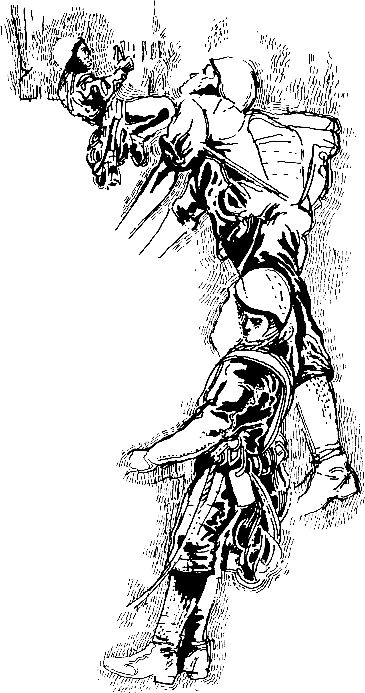
Four fabulous Cassin ring pitons here in the collection dating from the 1950s, or maybe a little earlier. This was a time when karabiners had not long been invented and it was common practice to thread the rope through the ring for protection. Ring pitons were often left in situ, particularly in Alpine regions, for abseiling when they often became known as ‘abseil rings’.
Object Production
Production Place:
Italy
Materials:
steel
Maker:
Cassin
Colour:
silver
Dimensions:
a) 14.0(l) x 1.5(w) x 2(d)cm. b) 12.7(l) x 2.0(w) x 2.3(d)cm c) 13.0(l) x 2.0(w) x 2.2(d)cm d) 11.1(l) x 1.3(w) x 2.0(d)cm