Homemade 'sticht' plate

Click on an image to enlarge

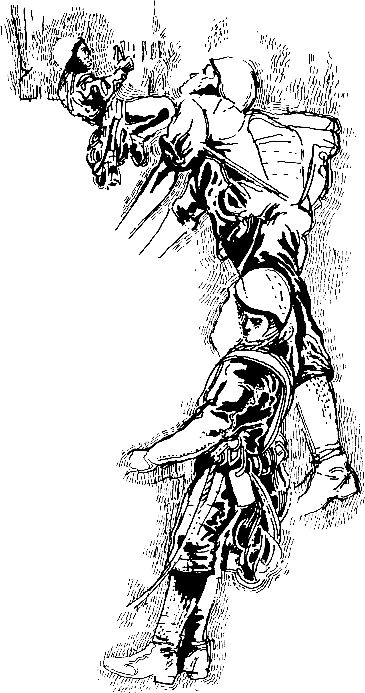
Old style – with rope wrapped around arm and body.
Homemade ‘sticht’ plate
Description
Momemade ‘sticht plate with seven sides.
Inscription description
Acquisition Method:
Donated by Dave Cuthbertson
Number of Objects:
1
Related Items:
Provenance:
For over a hundred years mountaineers had been wrapping ropes around their waists, hitching them over their shoulders and twisting them around their bodies to get some friction in order to hold a fall, until the late 1960’s when a German climber called Franz Sticht came along and created the ‘Sticht Plate’ which was basically a metal or aluminium plate that created the friction when used in conjunction with a karabiner. The following 50 years or so have seen hundreds of ‘refinements’ of Franz Sticht’s original design with the two main objectives being to create a device that can deal with a variety of rope diameters and one that can also be safely used as an abseil device. The example we have here is a homemade version of a simple ‘sticht’ plate – the word ‘sticht’ has become universally used for all belay plates in the same way that we call vacuum cleaners ‘hoovers’ – cut from a piece of aluminium. It was and still is, perfectly functional, and very similar to production models that appeared in the 1970’s. Mountain Guide Dave(Smiler)Cuthbertson donated it to the collection.
Object Production
Production Place:
Materials:
aluminium
Maker:
homemade
Colour:
silver
Dimensions:
7(l) x 4.5(w) x 1(d) cms
Object Condition:
Condition Date Check:
29/10/2013
Administration
Accession Number:
1090.2013.1
Creator:
Hermione Cooper
Accession Date:
29/10/2013
ID:
1
Category:
Location
Location:
Bohuntin
Current Location
Rules:
Spectrum : UK Museum documentation standard, V.3.1 2007
Scottish Mountain Heritage Collection
Privacy Overview

This website uses cookies so that we can provide you with the best user experience possible. Cookie information is stored in your browser and performs functions such as recognising you when you return to our website and helping our team to understand which sections of the website you find most interesting and useful.