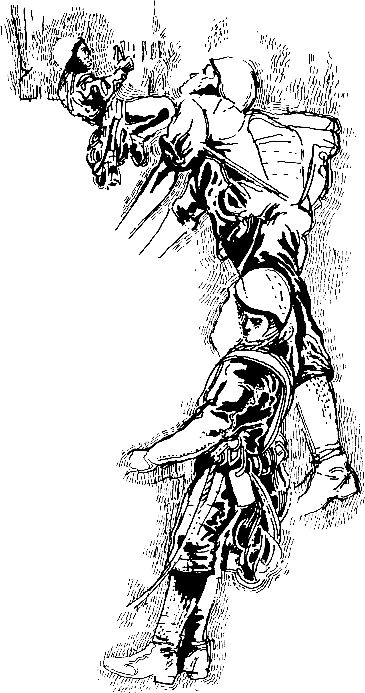
Climbers often refer to ‘pitons’ as ‘pegs’, which is no big surprise as piton is French and loosely translated means ‘little peg’. It follows that the piton hammer used to drive the pitons home is often referred to as a peg hammer (not to be confused with tent pegs!). Pitons are not used so much in modern times, except perhaps on the big wall climbs, or, more often, for abseiling. On big wall climbs, in particular, they will most likely be needed higher up the climb, so once the pitch has been led, the second climber retrieves the pitons. This is called de-pegging and involves lots of bashing and thumping to get the pitons back out. There are specialist hammers designed for banging pitons in and easing them back out again, they are usually called ‘de-peggers’ and we have an excellent example here in the collection. The only difference between this one and normal piton hammers is the ‘eye’, which is used to clip a karabiner, which can be clipped to other karabiners, or a short length of chain, which is clipped into the piton at the other end. In theory the kinetic energy created by a sharp tug removes the piton. Unfortunately some pitons can be quite belligerent and don’t always comply!