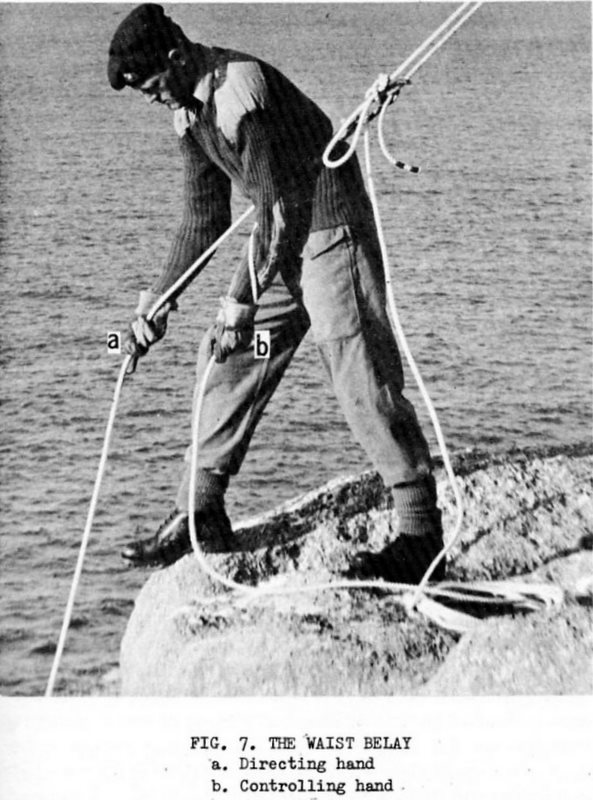
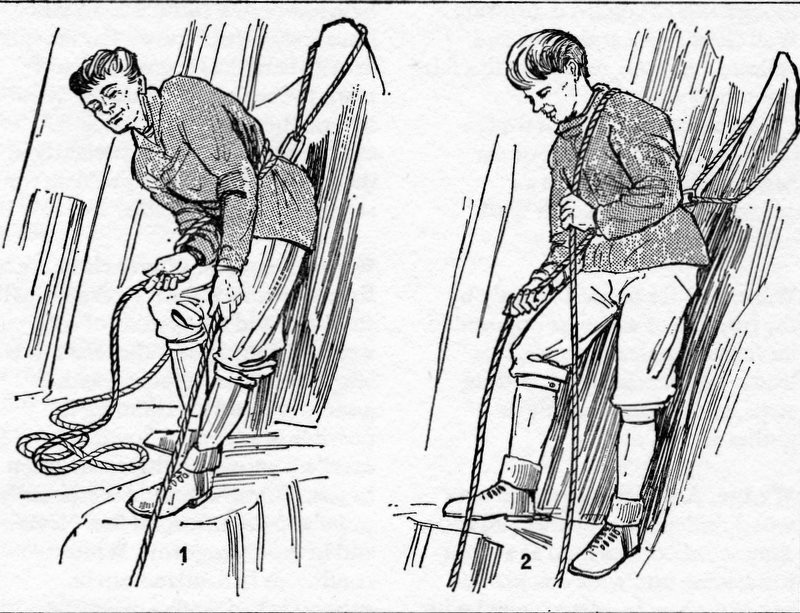
For over a hundred years mountaineers had been wrapping ropes around their waists, hitching them over their shoulders and twisting them around their bodies to get some friction in order to hold a fall, until the late 1960’s when a German climber called Franz Sticht came along and created the ‘Sticht Plate’ which was basically a metal or aluminium plate that created the friction when used in conjunction with a karabiner. The following 50 years or so have seen hundreds of ‘refinements’ of Franz Sticht’s original design with the two main objectives being to create a device that can deal with a variety of rope diameters and one that can also be safely used as an abseil device.
More recently there has been a request for ‘hands free’ devices which, when rigged correctly, will ‘jam’ should a fall occur, without any input from the belayer. Lightness and simplicity has also been a criteria.
NB A bit like vacuum cleaners have come to be known as ‘Hoovers’ whatever their make or model, belay devices of all makes, shapes and sizes are often called ‘sticht plates’
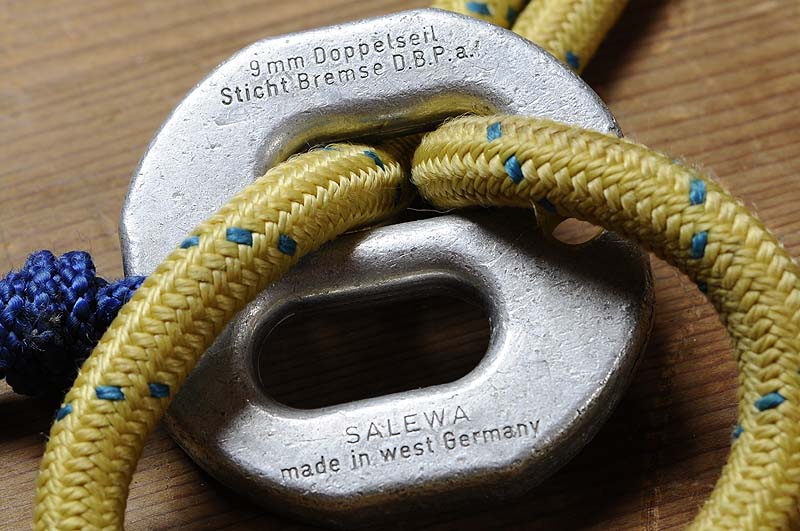
This is an original, and fairly early (circa 1972/3) Sticht Plate designed to take double 9mm ropes. It came originally from the Scottish National Outdoor Centre at Glenmore Lodge and was ‘retired’ to make way for newer versions.