Selections from the Collection

Mick's Choice

Hiatt Lightweight Karabiners

Hiatt Lightweight Karabiners
Close-up of Hiatt Lightweight Karabiners
Close-up of Hiatt Lightweight Karabiner
Advert from Climber & Rambler September 1977.
2 x Hiatt screwgate lightweight alloy ‘D-shaped’ karabiners.
Seems like a guy called Hiatt started making felons leg irons, gang chains, metal neck collars and other nasty things for the slave trade back around 1780. The abolition of slavery in 1833 meant a change to manufacturing handcuffs along with other slightly less savoury metal items.

It was probably around 1960 that another change came about and Hiatt started making steel karabiners, several of which we have elsewhere in the collection, along with lots of Hiatt pitons. The steel karabiners were pretty nasty things – heavy, with sharp edges to nip your fingers, so a slight relief came in 1974/5 when they produced a lightweight alloy version, two fine examples of which we have here in the collection, a lighter version appeared in 1977 in conjunction with Troll, as we can see from the advert above.

We’re not sure how many of either versions were produced, probably not many as they are a bit of a rarity. These two were kindly donated by Ken MacTaggart in 2024 – thanks Ken.

Stubai Ice Axe (early version)

Stubai Ice Axe (early version)
Close-up of Stubai logo
The well-shaped and well-hammered head
Wooden-shafted ice axe with metal head and point, made by Stubai.
We have several Stubai ice axes in the collection, though this one seems to be one of the oldest. The shape of the head indicates an early production method, we think 1930s/40s, and the patina of the wooden shaft also indicates several decades of use. Looks like this one has been shortened at some point – early axes were much longer, and also looks like the pick has been ‘drooped’ a little to cater for the ever steeper ice of the 1960s/70s. The much-hammered head indicates a much used, much loved timepiece, no doubt with a tale to tell, sadly the previous owner, Jack Simpson, is no longer around to tell the tale – many thanks in absentia.

Optimus 100 Hurricane Lantern (in bespoke case)

Optimus 100 Hurricane Lantern (in bespoke case)
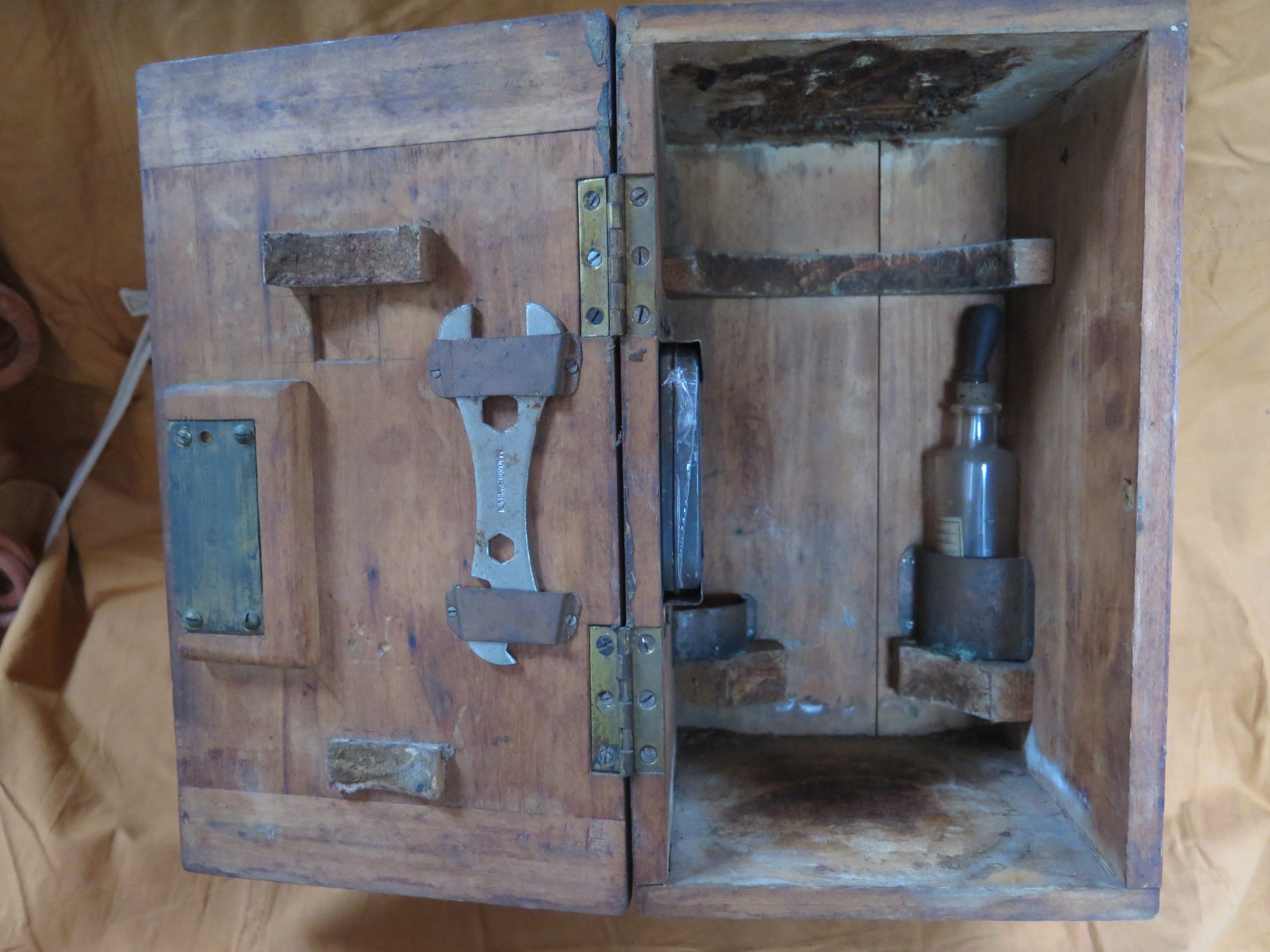
Jack’s fabulous home-made carrying case
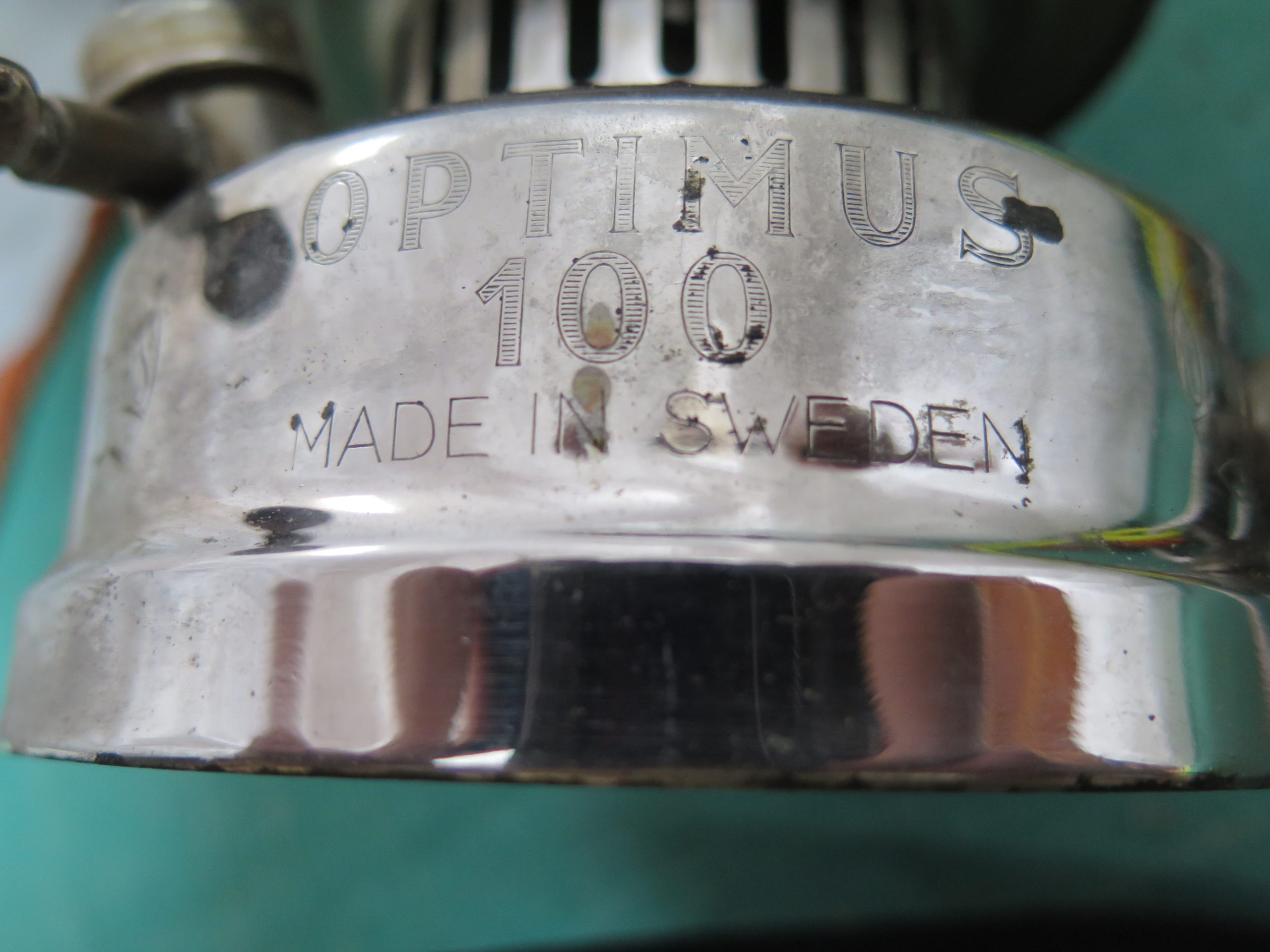
The rare Optimus 100
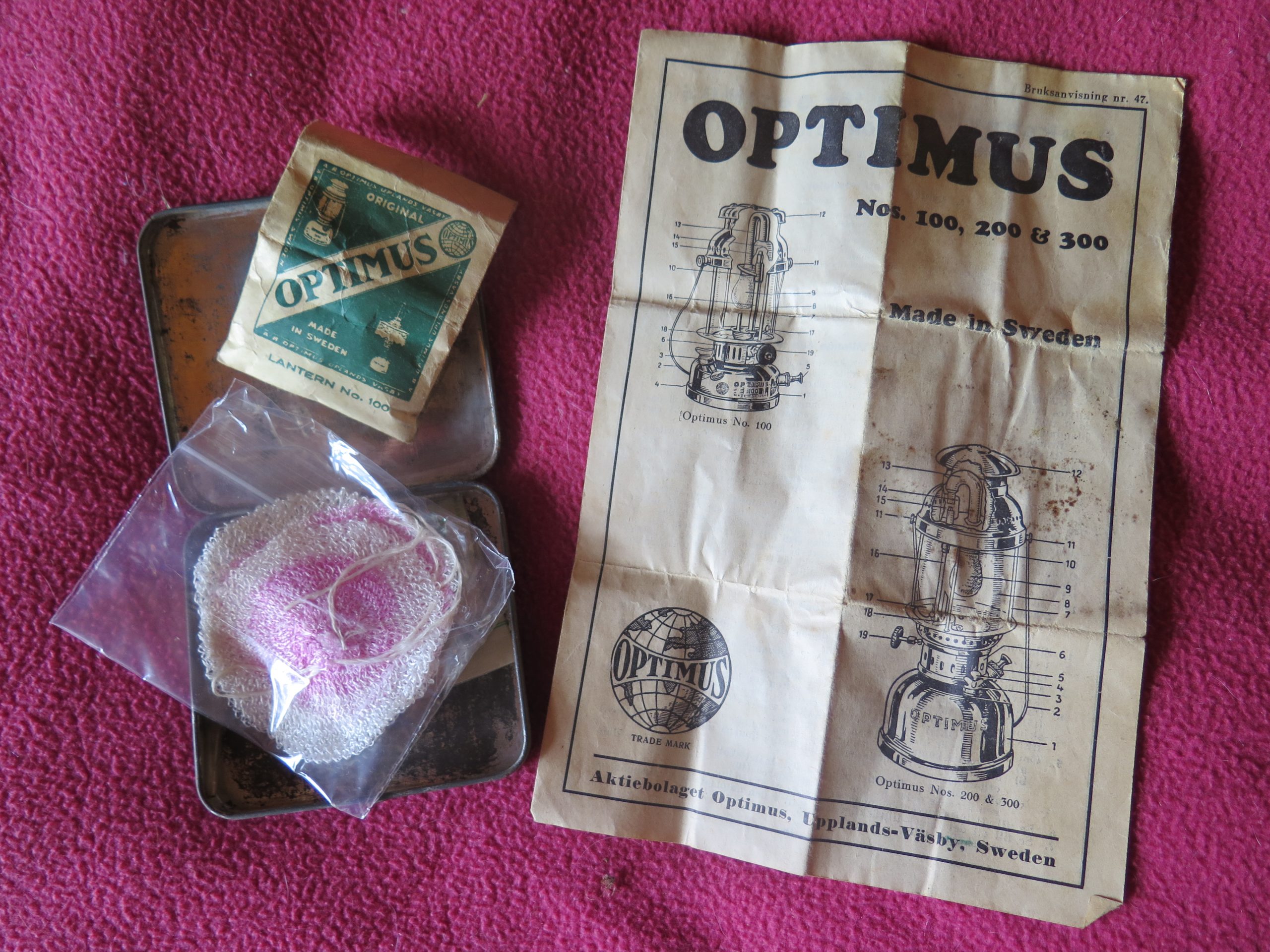
Instructions and spares in the wee tin
Pressurised paraffin lamp with wooden carrying case, spanner, metal tool box containing instructions for use and spare parts, and glass fuel bottle.
Fab-u-lous and as many other nice adjectives you can find for this great lamp and its even greater carrying case. We try not to use the ‘icon’ word too much, but this is one deserved occasion. The lamp tells of an era when ‘weekenders’ headed off to the hills with their mates in the 1950s to spend a couple of days camping, bothying or cave dwelling, one of the gang would be the ’tilley man’, tilley being the generic term for all presuurised paraffin lamps back then, even if, as in this case, it was made by Optimus! Jack Simpson was the ’tilley man’ in this case and he’s constructed a fabulous wooden carrier to hold his lamp, tightly fitted to avoid damage in transit, ensuring that he would light up the weekend. Jack himself finally ran out of fuel some moons ago and his wife Mary kindly passed on his Optimus. A book called ‘May the Fire Always be Lit’ by Jock Nimlin tells us much about those halcyon days around the campfire.

Karabiner, piton + Nut (homemade)

Karabiner, piton 7 Nut (homemade)
Our homemade versions alongside the real thing.
A snaplock karabiner, a p shaped piton and a nut on rope.
We always enjoy items of the homemade variety since they are by definition, unique, and tell of a world without fancy gear shops, massed production equipment and a breed of men and woman who had a ‘make and mend’ mentality. The items themselves often hinting at a time line, in this case we think the 1960’s. Much of the UK’s climbing gear was imported from the continent back then; Stubai of Austria being the most prolific producers of pitons. The one we have here is pretty much a copy of a Stubai leaf piton, cut from a sheet and bent to form the angle which has a large hole for a karabiner. We have never seen a homemade karabiner before but this one looks very much like a copy of a triangular shaped Haseney karabiner which you will find elsewhere in the collection. Unfortunately, we know little about either’s history. The final one is a little easier to work out as it looks like a crude version of a Peck cracker cut from a piece of aluminium rod – comparison picture opposite. Our good friend, Ian Sykes, kindly dropped these items off in a bag of ‘goodies’ which belonged to his ‘mate’….we don’t know who his mate was and whether or not he made these but thanks anyway.