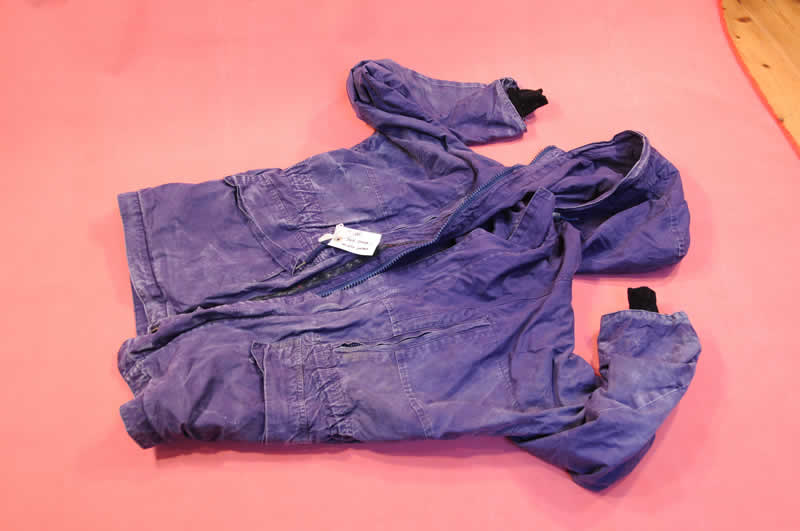
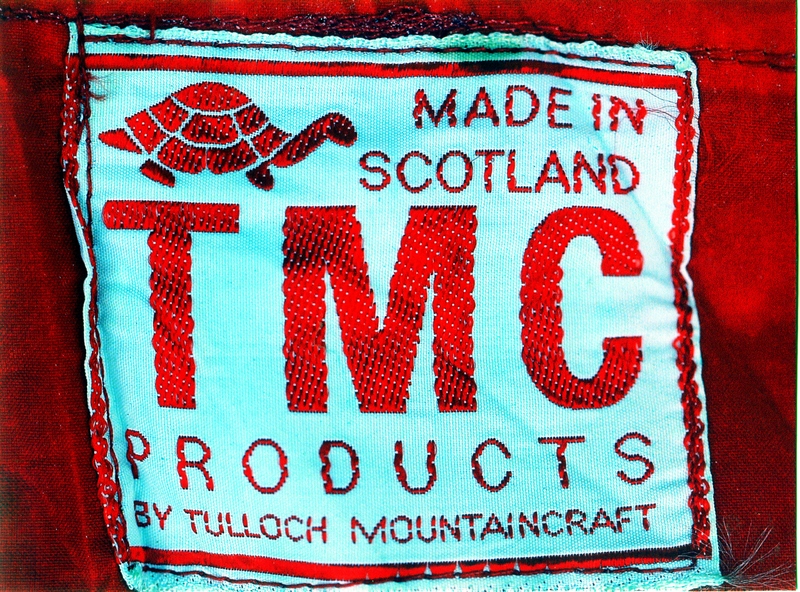
This jacket doesn’t have any labels so we’ve got one from another Tulloch Mountaincraft garment
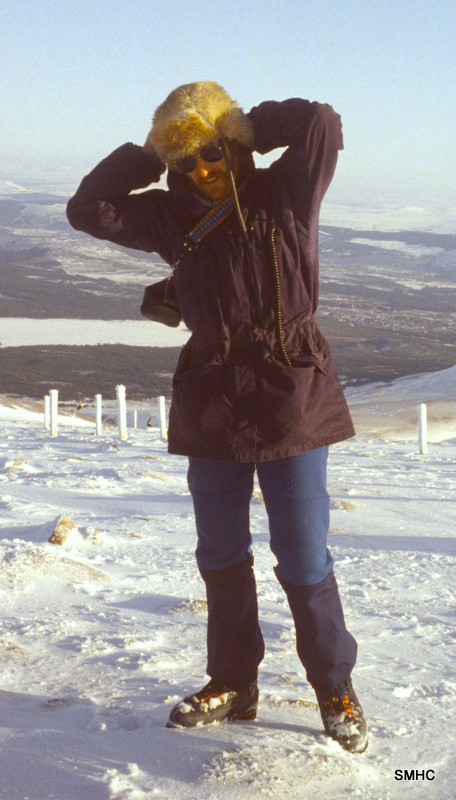
Martin Burrows-Smith in his ventile jacket
Description
Ventile ski jacket. Drawstring wired hood. Two zipped chest pocket. Two zipped side pockets. Drawstring waist. Long front zip and velcro. Woollen cuffs.
The long pedigree of ventile fabric goes back as far as the late 1930s. With war looming, the British Government thought that there would be a shortage of flax which was used in those days for fire hoses and water buckets. An alternative was required and research was commenced into the use of cottons, woven in such a way as to keep water in…and it worked!
When war did eventually break out in 1939 the requirement for a new fabric was even more imperative, particularly for pilots ditching into the sea and possibly perishing from hypothermia.
A group of scientists from the Shirley Institute in Manchester managed to create a dense weave of 100% cotton which expanded when wet, making it waterproof and windproof. They called it ventile and when made into a flying suit, a pilot’s survival time in the sea was greatly improved.
Though the fibre never became hugely popular in the UK, it did, and still does, have its adherents. This particular jacket was made by a firm back in the 1970s, called Tulloch Mountaincraft, for The National Outdoor Centre at Glenmore Lodge – the instructors there used them for many years and being well made and very hard wearing they stood the test of time before eventually being replaced by somewhat lighter, more versatile clothing. One disadvantage of ventile was that in the temperate climate of Cairngorm, a rain-soaked ventile jacket, low down, became a frozen suit of armour when above freezing level and there are stories of jackets being ‘stood up’ on their own when the wearer managed to get it off!